
In 1994, I was at Montana State University working on a group paper for a business class about big business fraud. At the time, the big deal was the debacle with the Saving and Loans industry, but we did ours on how NAFTA did not turn out to be the big investment opportunity it was promised to be. In the current climate, one that could be investigated would be Elizabeth Holmes and the financial disaster that was Theranos, and that is where You Can See Everything picks up.
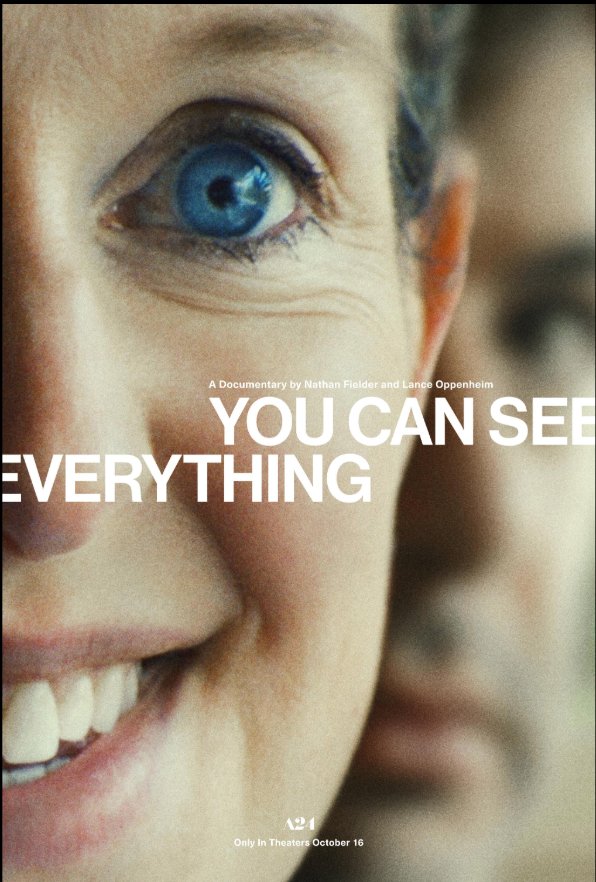
Nathan Fielder (The Web) and Lance Oppenheim (Primetime) co-direct this documentary that starts out a little over a month before Holmes is set to report to federal prison as her life is documented alongside that of her boyfriend, Billy Evans, and their two children. What starts out as trying to understand who she is versus who the public thinks she is becomes SO much more.
This is one of the weirdest “documentaries” is have ever seen, so give me a moment to explain why I am using quotation marks. The first half of this three-hour film seems to be your normal documentary following Elizabeth and Billy dealing with the stress of knowing that the inevitable is about to happen. There is a bit of a difference here since Fielder went from behind the camera to being an active participant, and he actually deals with that part of it well. He is able to ask Elizabeth the though questions in the right way while dealing with some incredibly unique and awkward moments. There is one very intense sequence where the three of them get together to watch the Hulu production of her story called The Dropout, with Fielder doing his best to stay sensitive to her reactions but still wanting her to answer the tough questions, while at another point he has to witness Billy and Elizabeth trying to get investors for another “groundbreaking” company just days before she has to report to prison for fraud.
The second half of the film is where things go in a completely different direction, almost making it a different film altogether. Given our allergy for spoilers, I don’t want to ruin what happens, but it is different from just about everything else I have ever seen.
Be warned that You Can See Everything is nearly 3 hours long, and at times feels it. Yes, there are many things that I think could have been cut, but I understand why they were left in to show how the filmmakers gave Elizabeth a number of opportunities to tell what the public believes to be the truth, but she stuck to her story as an innocent victim that did no wrong. While many who watch this film think Elizabeth got what she deserves and deserved to be in prison, the question I have is why Elizabeth chose to participate in this documentary one way or another.
There were a few moments here where I was reminded of the Anthony Weiner doc named after him with the subject constantly shooting themselves in the foot. It’s a great film and breaks ground, but although it IS long, it NEEDS to be. Although it may not get nominated for Best Picture, look for it in the Long Form Documentary category next year, and so I can recommend it to be seen in a theater for a twilight showing.